


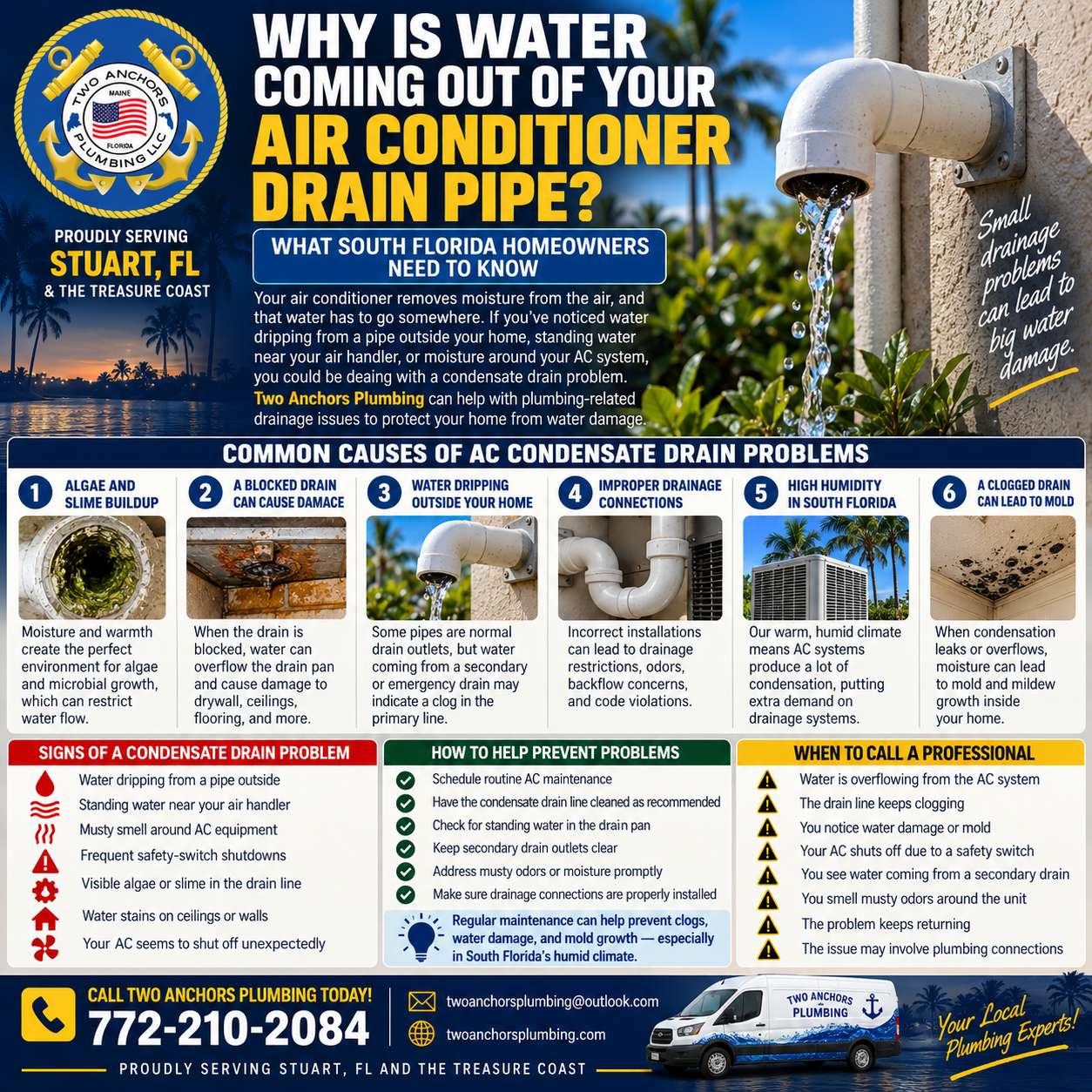
Why Is Water Coming Out of Your Air Conditioner Drain Pipe? What South Florida Homeowners Need to Know
Living in South Florida means dealing with heat, humidity, and air conditioners that work overtime. While most homeowners know their AC systems produce condensation, many don’t realize how important the condensate drain line is—or how much damage a clogged drain can cause.
If you’ve noticed water dripping from an unusual pipe outside your home, standing water near your air handler, or unexplained moisture around your AC equipment, you could be dealing with a condensate drainage problem.
For homeowners in Stuart, FL, understanding how these drainage systems work can help prevent water damage, mold growth, and unexpected repair expenses.
At Two Anchors Plumbing, we understand how important proper drainage is to protecting South Florida homes. Although condensate equipment issues are generally handled by HVAC professionals, certain drainage problems may involve plumbing connections that require a licensed plumber.
What Is an AC Condensate Drain Line?
Your air conditioner doesn’t just cool the air inside your home. It also removes moisture.
As warm, humid indoor air passes over the cold evaporator coil, water vapor condenses into liquid water. That water collects in a drain pan and travels through a condensate drain line to an approved discharge location.
In South Florida’s humid climate, an air conditioner can produce a considerable amount of condensation during normal operation.
The drainage system must carry that water away properly to prevent it from accumulating around your equipment.
1. Algae and Slime Can Clog the Drain Line
One of the most common causes of AC condensate drainage problems is biological buildup.
The combination of moisture, warmth, and organic material creates favorable conditions for algae and microbial growth inside condensate piping.
Over time, this buildup can restrict water flow.
Warning signs include:
- Water collecting near the air handler
- A musty smell around AC equipment
- Water dripping from an emergency drain outlet
- Frequent condensate safety-switch activation
- Visible slime around accessible drain openings
Because these restrictions often develop gradually, homeowners may not recognize the problem until water begins overflowing.
2. A Blocked Drain Can Cause Water Damage
When condensation cannot escape through the primary drain line, water can accumulate in the drain pan.
Depending on the installation, the system may have a secondary drain, an auxiliary pan, or a safety switch designed to limit overflow damage.
However, these safeguards aren’t a substitute for maintenance.
If water escapes the drainage system, it can damage:
- Drywall
- Ceilings
- Flooring
- Cabinets
- Insulation
- Surrounding building materials
A small condensate blockage can become an expensive water-damage problem if ignored.
3. Why Is Water Dripping From a Pipe Outside Your House?
Not every dripping pipe indicates a problem.
Some condensate drain lines discharge outdoors as part of normal operation.
However, an unfamiliar pipe that suddenly begins releasing water—particularly one positioned above a window or doorway—could be a secondary or emergency condensate outlet.
That may indicate the primary drain is obstructed.
The location and purpose of the pipe should be identified before assuming the discharge is normal.
4. Improper Drainage Connections Can Create Plumbing Problems
Condensate drainage must be installed according to applicable plumbing and mechanical codes.
Depending on the equipment and installation, improper connections can contribute to:
- Drainage restrictions
- Unpleasant odors
- Backflow concerns
- Water leakage
- Improper wastewater connections
Condensate drainage should not be connected directly to a sanitary drainage system in a manner that allows sewer gases to enter occupied spaces.
A licensed professional can determine whether a connection meets applicable requirements.
5. Why South Florida Homes Are Especially Vulnerable
Here in Stuart, FL, air conditioners frequently operate for extended periods because of the warm, humid climate.
That means condensate drainage systems may handle substantial amounts of water throughout the year.
Several factors make maintenance especially important:
High humidity: More moisture in the air means more condensation can form during cooling.
Long cooling seasons: Frequent system operation creates ongoing demand on condensate drains.
Warm conditions: Moist environments can support biological buildup.
Seasonal occupancy: Homeowners returning after an extended absence may discover moisture problems that developed while they were away.
Regular inspections can help identify developing drainage problems before significant damage occurs.
6. Can a Clogged AC Drain Cause Mold?
Yes. When condensate leaks or overflows, surrounding building materials may remain damp.
Persistent moisture can support mold and mildew growth, particularly in enclosed spaces with limited ventilation.
The solution involves correcting the drainage problem and drying affected materials promptly.
Simply wiping away visible moisture without correcting the cause may allow the problem to return.
7. How Can You Prevent Condensate Drain Problems?
Preventive maintenance is the best approach.
Homeowners should consider these precautions:
- Schedule routine air-conditioning maintenance.
- Have the condensate line inspected and cleaned as recommended by the HVAC manufacturer.
- Check accessible drain pans for standing water.
- Investigate unexplained water around AC equipment.
- Keep secondary drain outlets unobstructed.
- Address recurring moisture or musty odors promptly.
- Ensure condensate drainage connections are properly installed.
Avoid pouring harsh chemicals into condensate lines unless the equipment manufacturer specifically approves their use.
When Should You Call a Professional?
Contact a qualified HVAC technician if you notice water overflowing from the AC system, a blocked condensate line, or repeated condensate safety-switch shutdowns.
A licensed plumber may also be needed when the problem involves a sanitary drain connection, plumbing backflow, or another part of the home’s plumbing infrastructure.
Identifying which system is responsible helps ensure the problem receives the correct repair.
How Two Anchors Plumbing Can Help
Although routine air-conditioning service belongs with HVAC professionals, certain condensate drainage installations interface with residential plumbing.
When plumbing-related drainage issues arise, Two Anchors Plumbing can evaluate applicable plumbing components and recommend appropriate repairs.
Our residential plumbing services include:
✔ Drainage diagnostics ✔ Drain cleaning ✔ Plumbing leak detection ✔ Drain connection evaluation ✔ Plumbing pipe repairs ✔ Residential plumbing inspections ✔ Water-damage prevention recommendations
We believe homeowners deserve clear explanations and practical solutions—not unnecessary repairs.
Protect Your Stuart, FL Home From Hidden Water Damage
Water doesn’t have to come from a broken supply pipe to cause serious damage.
A blocked condensate drain, improperly installed connection, or unnoticed drainage problem can allow moisture to accumulate where it doesn’t belong.
Understanding these risks is especially important for homeowners in Stuart and throughout South Florida.
If you suspect a problem involving your home’s plumbing or drainage connections, contact Two Anchors Plumbing for professional assistance.
Two Anchors Plumbing
Proudly serving Stuart, FL and the Treasure Coast
twoanchorsplumbing@outlook.com
Two Anchors Plumbing — Protecting your home with dependable plumbing solutions.
Comments are closed