

Why Does Your Washing Machine Drain Overflow During the Spin Cycle?
You start a load of laundry, everything seems normal, and then your washing machine reaches the spin cycle. Suddenly, water starts backing up from the drain pipe behind the washer and spilling onto the laundry room floor.
It’s a frustrating problem, and it can happen even when the washing machine itself is working correctly.
A washing machine drain overflow is often caused by a restriction in the home’s drainage system, an improperly installed drain hose, or a drain pipe that cannot handle the washer’s discharge rate.
For homeowners in Stuart, Florida, and throughout the Treasure Coast, identifying the cause quickly can help prevent damage to flooring, walls, cabinets, and nearby belongings.
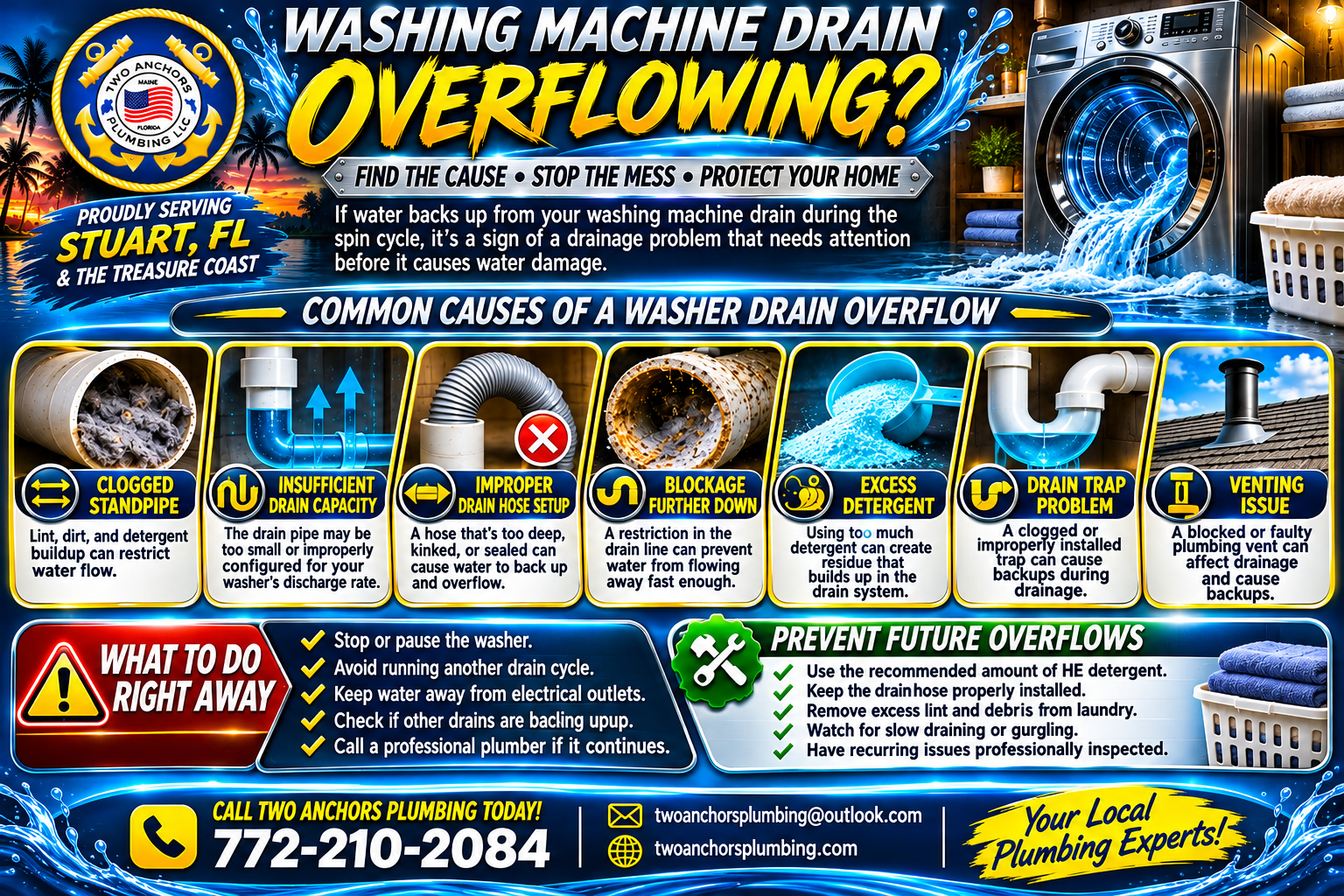
1. A Partially Clogged Washing Machine Drain
One of the most common reasons a washing machine drain overflows is a partial blockage inside the standpipe or connected drain line.
Every time you wash clothes, small amounts of lint, hair, dirt, and detergent residue can enter the drainage system.
Over time, these materials may accumulate and restrict water flow.
During the wash cycle, you might not notice anything unusual. But when the washer begins pumping out water, the restricted drain may not empty quickly enough.
Water then rises inside the standpipe and spills onto the floor.
Warning signs of a clogged washer drain
- Water backing up during the drain or spin cycle
- Gurgling sounds from the laundry drain
- Slow drainage in a nearby utility sink
- Repeated overflow despite cleaning the washer
- Water appearing around the standpipe connection
A professional drain inspection can help determine whether the blockage is near the washer or farther down the drainage system.
2. The Drain Pipe Cannot Handle the Washer’s Discharge Rate
Modern washing machines can discharge water rapidly through their drain pumps.
If the existing standpipe or connected drainage piping is undersized, improperly configured, or restricted, water may back up during high-volume discharge.
This issue can become noticeable after replacing an older washing machine with a newer model.
The appropriate standpipe and drain dimensions depend on the applicable plumbing code, installation configuration, and manufacturer’s requirements.
A plumber can evaluate whether the existing laundry drain is properly sized and installed.
3. The Washing Machine Drain Hose Is Installed Incorrectly
The flexible drain hose carries wastewater from the washing machine into the home’s drainage system.
If the hose is inserted too deeply into the standpipe, sealed improperly, kinked, or positioned at an incorrect height, drainage problems may occur.
An improper installation can also interfere with the air gap needed for correct drainage and siphon prevention.
The drain hose should be installed according to the washing machine manufacturer’s specifications.
Avoid sealing the hose airtight into the standpipe unless the approved system design specifically requires a different arrangement.
4. A Blockage Farther Down the Drain Line
Sometimes the washing machine standpipe is clear, but the connected drain line has a blockage farther downstream.
Because washing machines discharge relatively large volumes of water over short periods, they can expose restrictions that aren’t immediately noticeable at other fixtures.
You might also experience:
- Water backing up into a nearby sink
- Gurgling from adjacent drains
- Slow drainage elsewhere in the home
- Unpleasant odors near the laundry area
- Recurring backups after temporary cleaning
When several fixtures are affected, the problem may involve a shared branch drain or a larger section of the drainage system.
5. Excessive Detergent and Residue Buildup
Using too much laundry detergent can contribute to residue accumulation inside the washing machine and drainage system.
High-efficiency washing machines generally require HE detergent and manufacturer-recommended quantities.
Excess detergent can create excessive suds and leave additional residue behind.
Although detergent buildup isn’t always the primary cause of a drain overflow, it may contribute to an existing drainage restriction over time.
Following the washer manufacturer’s detergent recommendations can help reduce unnecessary residue.
6. A Plumbing Vent Problem
Your home’s drainage system relies on proper venting to help wastewater flow and maintain trap seals.
If a plumbing vent is obstructed or the drainage system is improperly configured, drainage performance can be affected.
Possible symptoms include gurgling drains, unusual water-level changes in nearby traps, and recurring drainage problems.
However, a washing machine standpipe overflow is more commonly associated with a blockage, inadequate drain capacity, or installation problem.
A plumber can evaluate the drainage and venting system to determine the actual cause.
7. A Problem With the Laundry Drain Trap
A washing machine standpipe normally connects to a properly configured trap.
The trap holds water to help prevent sewer gases from entering the laundry room.
If the trap or nearby piping becomes obstructed, wastewater may back up during discharge.
Improper trap installation can also contribute to drainage problems.
Because the trap may be concealed inside a wall, professional diagnosis may be needed.
Why Does the Overflow Happen During the Spin Cycle?
Many washing machines pump out water before or during portions of the spin cycle.
The washer’s drain pump can move water into the standpipe much faster than a partially blocked drain can carry it away.
As a result, the standpipe fills and overflows.
The timing is an important clue: if the water comes out of the standpipe rather than leaking from the washer cabinet, the home’s drainage connection deserves attention.
What Should You Do When the Washer Drain Overflows?
If water begins spilling onto your laundry room floor, take these steps:
- Stop or pause the washing machine.
- Avoid starting another drain or spin cycle.
- Keep clear of electrical outlets, cords, and appliances exposed to water.
- If safe, shut off the washer’s water supply.
- Remove standing water when it is safe to do so.
- Check whether nearby drains are also backing up.
- Contact a plumber if the problem persists or involves multiple fixtures.
Do not repeatedly run the washing machine to see whether the blockage clears. Additional discharge can cause more water damage.
Can You Use Chemical Drain Cleaner in a Washing Machine Drain?
Chemical drain cleaners are generally not a good first choice for washing machine standpipe problems.
Some products can damage components, create hazardous exposure conditions, or leave caustic chemicals in standing water that a plumber may later need to remove.
Mechanical drain cleaning or other professional methods may be more appropriate, depending on the blockage and pipe condition.
How to Help Prevent Washing Machine Drain Backups
Routine laundry habits can reduce the amount of material entering your drainage system.
- Use the recommended amount of HE detergent when applicable.
- Empty pockets before washing clothes.
- Remove excessive dirt or debris from heavily soiled items.
- Follow the manufacturer’s washer maintenance instructions.
- Watch for slow drainage or recurring gurgling.
- Have repeated drainage problems inspected rather than relying on temporary fixes.
A properly configured and unobstructed drain should be able to accommodate the washing machine’s intended discharge.
When Should You Call a Professional Plumber?
Contact a plumber if your washer drain overflows repeatedly, water backs up into nearby fixtures, the laundry room develops recurring drain odors, or you suspect a blockage inside the wall.
Professional attention is also appropriate if the problem began after installing a new washing machine or modifying the laundry plumbing.
Washing Machine Drain Repair in Stuart, FL
A washing machine drain overflow can quickly turn a routine laundry day into a water damage problem.
At Two Anchors Plumbing, we help homeowners throughout Stuart, FL and the Treasure Coast diagnose and repair residential drainage problems.
Our services include drain cleaning, drainage diagnostics, laundry plumbing repairs, drain line inspections, and residential plumbing leak detection.
Two Anchors Plumbing LLC
Serving Stuart, FL & the Treasure Coast
twoanchorsplumbing@outlook.com
Don’t let a clogged laundry drain turn into a flooded laundry room.
Comments are closed