

Why Is Water Coming Out of Your Water Heater’s Overflow Pipe?
What South Florida Homeowners Need to Know About Water Heater Pressure Relief Valves
You walk into your garage, utility room, or outside near your water heater and notice something unusual: water is dripping from a pipe connected to the side or top of the tank.
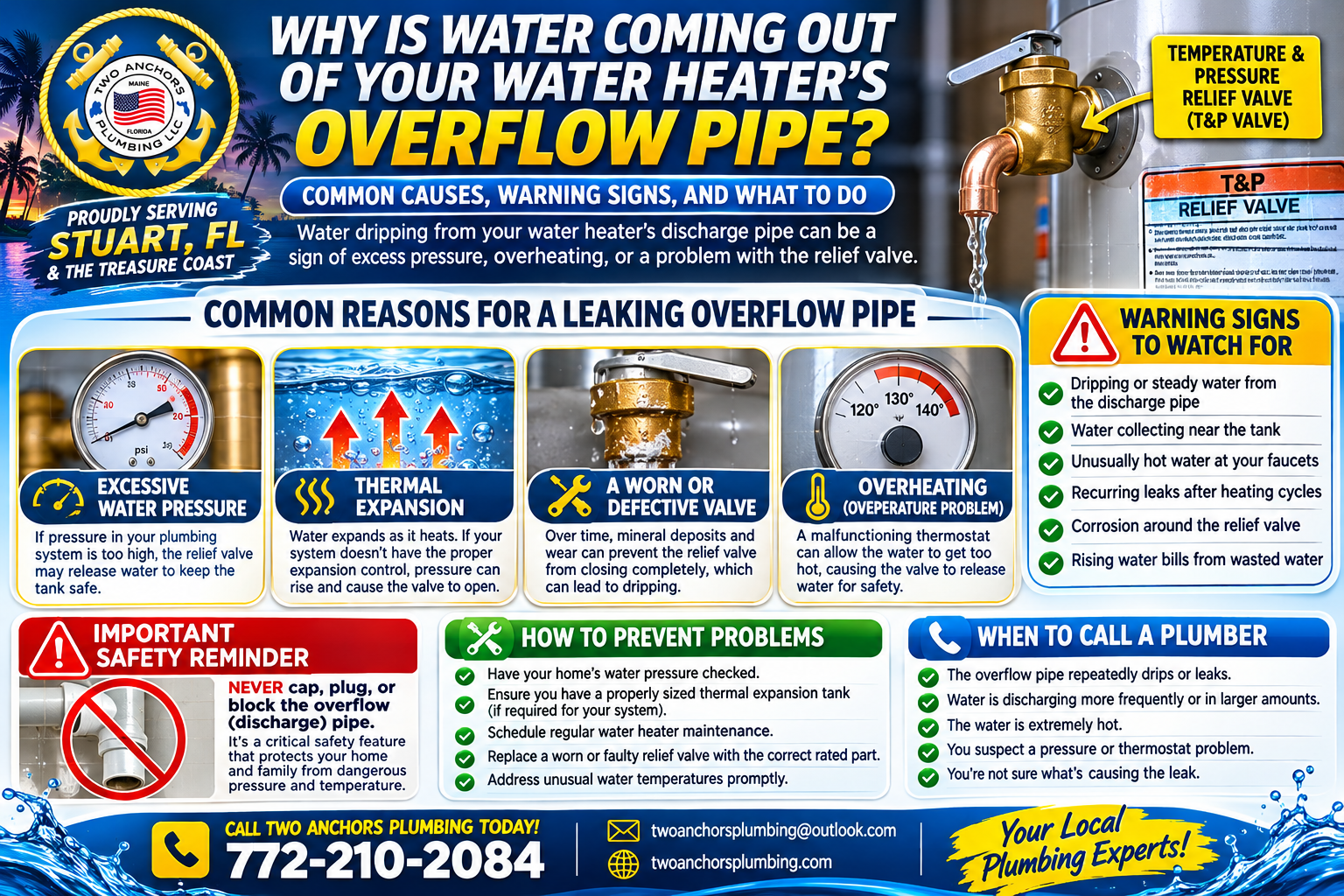
At first, it might seem like a minor leak. But that pipe may be connected to one of your water heater’s most important safety components—the temperature and pressure relief valve, commonly called the T&P valve.
When this valve releases water, it can indicate excessive pressure, overheating, a defective valve, or another issue that needs attention.
For homeowners in Stuart, Florida, and throughout the Treasure Coast, understanding this warning sign can help prevent water damage and potentially dangerous water heater conditions.
1. What Is a Water Heater Pressure Relief Valve?
Most traditional tank-style water heaters have a temperature and pressure relief valve.
Its purpose is to release water if the tank’s temperature or pressure reaches unsafe levels.
The valve connects to a discharge pipe that directs released water toward an approved discharge location.
Unlike a regular plumbing connection, the T&P valve is an essential safety device.
Never cap, plug, or block the discharge pipe to stop a leak. Doing so can prevent the valve from relieving dangerous pressure.
2. Excessive Water Pressure
One possible reason a water heater’s relief valve releases water is excessive pressure inside the tank.
Water pressure may rise because of high incoming supply pressure or pressure increases associated with heating water.
When pressure exceeds the valve’s rated limit, the valve may open to protect the tank.
A plumber can measure the system pressure and inspect components such as pressure-reducing valves and thermal expansion controls.
3. Thermal Expansion Inside the Water Heater
Water expands as it heats.
In some plumbing systems, check valves, backflow preventers, or pressure-reducing valves create a closed system that prevents expanded water from flowing backward into the supply.
Without appropriate expansion control, pressure may increase each time the water heater heats a fresh tank of water.
This can cause intermittent discharge from the T&P valve.
A properly sized and functioning potable-water thermal expansion tank may be necessary, depending on the system design and applicable code.
4. A Worn or Defective T&P Valve
Like other plumbing components, temperature and pressure relief valves can deteriorate over time.
Mineral deposits, corrosion, or damage to internal sealing surfaces may prevent the valve from closing completely.
Possible symptoms include:
- Persistent dripping from the discharge pipe
- Water collecting near the discharge outlet
- Corrosion around the valve
- Leakage that continues even when tank temperature and pressure are normal
A qualified plumber can determine whether the valve requires replacement and verify that the underlying system conditions are safe.
5. Water Heater Thermostat Problems
A malfunctioning thermostat or heating control can sometimes allow the water heater to reach excessive temperatures.
If the tank overheats, the T&P valve may open to release dangerously hot water.
Warning signs may include unusually hot water at fixtures, repeated discharge, or abnormal water heater operation.
If the discharge is hot, forceful, or continuous, keep clear of the outlet and seek prompt professional assistance. Do not attempt to plug the pipe or operate the relief valve yourself.
6. Why Does the Overflow Pipe Drip Only Sometimes?
Intermittent dripping may occur during heating cycles when pressure rises.
For example, you might notice water beneath the discharge pipe in the morning or after significant hot-water use.
That pattern can be associated with thermal expansion, but it does not establish the cause on its own.
A plumber should check water pressure, expansion control, temperature settings, and valve condition before recommending repairs.
7. Is It Normal for the Pressure Relief Pipe to Drip?
A T&P valve is designed to open under specific temperature or pressure conditions, not to discharge routinely during normal operation.
Occasional water around the discharge location should not automatically be dismissed as harmless condensation.
Persistent or recurring discharge warrants investigation.
It’s also important to distinguish a T&P discharge pipe from an air-conditioner condensate line, a water-heater drain pan outlet, or another nearby pipe. These serve different purposes and have different causes of water discharge.
8. Why South Florida Homeowners Should Pay Attention
In Stuart and surrounding Treasure Coast communities, water heaters may be installed in garages, utility closets, or other locations where small leaks can go unnoticed.
A discharge pipe that repeatedly releases water may contribute to:
- Moisture damage around the water heater
- Deterioration of surrounding materials
- Unnecessary water consumption
- Corrosion of nearby components
- More serious problems if the underlying pressure or temperature condition remains unresolved
Routine inspection is particularly useful when a water heater is located in an area that homeowners rarely visit.
9. What Should You Do if Water Is Coming Out of the Pipe?
First, identify whether the water is coming from the T&P discharge pipe, the drain pan, or another connection.
If the water is cool and only dripping slightly, arrange an inspection rather than ignoring it.
If water is discharging forcefully, is extremely hot, or appears to be associated with overheating, stay away from the discharge and contact a plumbing professional immediately. If you can safely isolate power or fuel and water using familiar controls without approaching the hazard, follow the manufacturer’s emergency instructions.
Do not remove the relief valve, block the discharge pipe, or attempt to defeat the safety mechanism.
10. How Can You Prevent Water Heater Pressure Problems?
Several maintenance practices can reduce the risk of unexpected problems:
- Have your home’s water pressure checked when appropriate.
- Ensure any required thermal expansion tank is properly maintained.
- Schedule water heater inspections.
- Address unusual water temperatures promptly.
- Watch for corrosion and moisture around the tank.
- Replace defective safety components with properly rated parts.
- Follow the manufacturer’s recommended maintenance procedures.
A plumber can evaluate the complete system rather than treating recurring discharge as an isolated valve problem.
When Should You Call a Professional Plumber?
Contact a plumber if the relief pipe repeatedly drips, water collects beneath the heater, the discharge becomes more frequent, or the system has unusually high water pressure.
Professional attention is especially important if the water is excessively hot, the valve discharges continuously, or you suspect the heater is overheating.
Water Heater Repair in Stuart, FL
At Two Anchors Plumbing, we help homeowners identify water heater problems and determine the appropriate repair.
Our residential plumbing services include water heater inspections, leak diagnosis, pressure-related plumbing evaluations, water heater repair, and replacement.
Whether your water heater’s discharge pipe is dripping or you are concerned about excessive pressure, professional diagnosis can help identify the actual cause.
Two Anchors Plumbing LLC
Serving Stuart, FL & the Treasure Coast
twoanchorsplumbing@outlook.com
Don’t ignore water coming from your water heater’s safety discharge pipe.
Comments are closed