


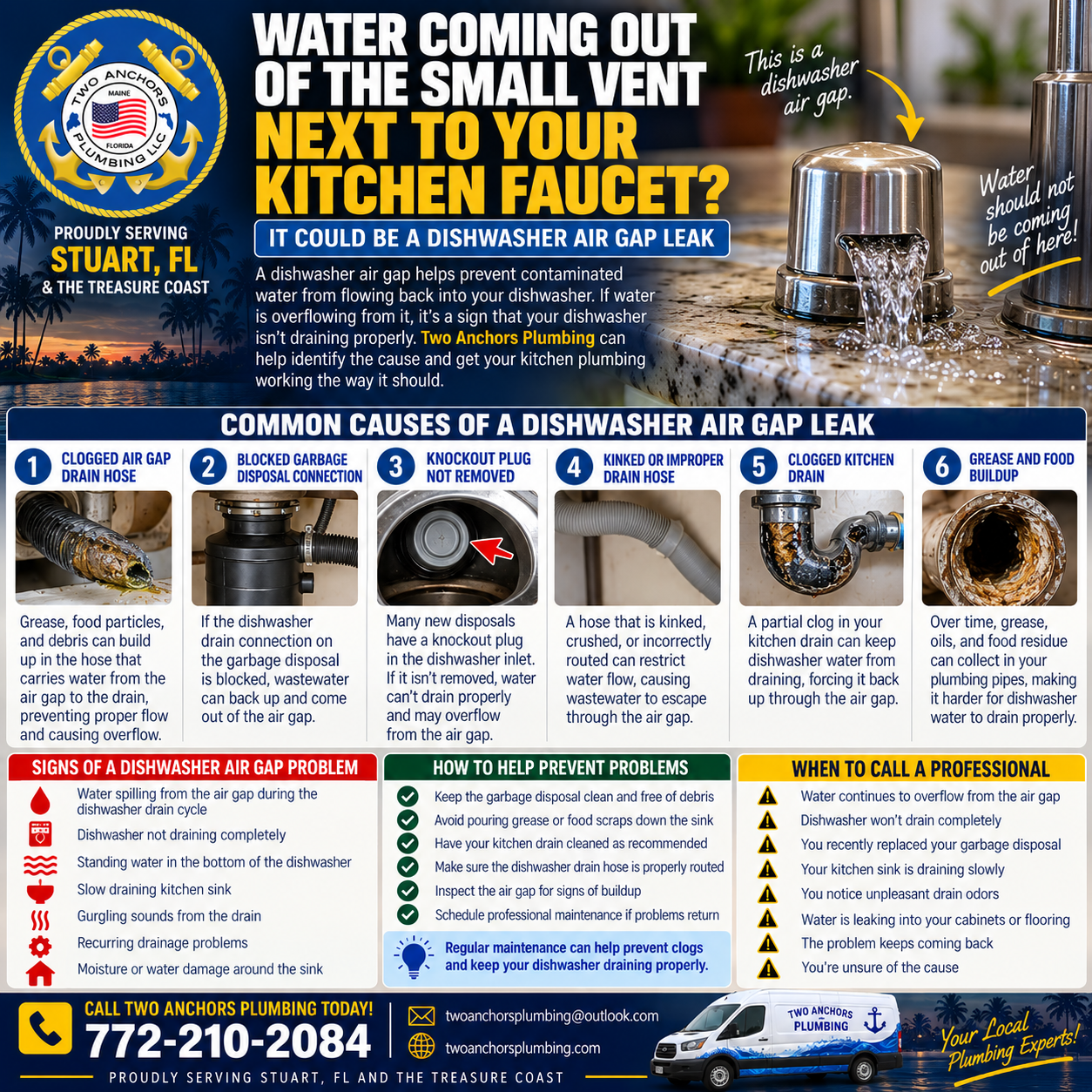
Why Is Water Coming Out of the Small Vent Next to Your Kitchen Faucet?
Understanding Dishwasher Air Gap Leaks in Stuart, Florida Homes
Imagine loading your dishwasher after dinner, starting a cleaning cycle, and walking away. A few minutes later, you notice water spilling onto your kitchen countertop from a small metal or plastic fixture beside your faucet.
If you’ve never experienced this before, you might wonder whether your dishwasher is broken or whether there’s a serious plumbing problem.
That small fixture may be a dishwasher air gap, and water overflowing from it is often a warning that wastewater isn’t draining properly.
For homeowners in Stuart, FL, understanding how dishwasher drainage works can help prevent kitchen water damage, unpleasant odors, and expensive repairs.
At Two Anchors Plumbing, we help homeowners throughout Stuart and the Treasure Coast diagnose kitchen drainage problems and keep their plumbing systems working properly.
What Is a Dishwasher Air Gap?
A dishwasher air gap is a plumbing backflow-prevention device that helps keep contaminated drain water from flowing backward into your dishwasher.
When installed, it’s usually mounted on the kitchen sink or countertop near the faucet.

During normal operation, wastewater travels from the dishwasher through a hose to the air gap and then through another hose toward the kitchen drain system.
The air gap provides a physical separation that protects against certain backflow conditions.
Not every dishwasher installation has a countertop air gap. Requirements and approved alternatives depend on local codes and the installation.
1. A Clogged Air Gap Drain Hose
One of the most common reasons water comes out of an air gap is a blockage in the hose that carries wastewater from the air gap to the drain connection.
Over time, the hose can accumulate:
- Grease and cooking oils
- Food particles
- Soap residue
- Organic buildup
- Other debris
When water cannot flow freely through this hose, it may escape through the air gap opening and spill onto the countertop.
Important: The overflowing water is a symptom of restricted drainage, not necessarily a defective air gap.
2. A Blocked Garbage Disposal Connection
Many dishwashers discharge through a connection on the garbage disposal.
If this connection becomes obstructed, dishwasher wastewater may back up toward the air gap.
This can happen when food debris or grease accumulates around the disposal’s dishwasher inlet or connected hose.
Homeowners may notice water spilling from the air gap specifically during the dishwasher’s drain cycle.
3. The Garbage Disposal Knockout Plug Was Never Removed
This is a particularly important issue after installing a new garbage disposal.
Many disposals have a removable knockout plug inside the dishwasher inlet connection.
If the dishwasher drains through that connection, the plug must be removed during installation according to the manufacturer’s instructions.
When the plug remains in place, dishwasher wastewater cannot enter the disposal properly.
Possible symptoms include:
- Water overflowing from the air gap
- Dishwasher drainage errors
- Standing water inside the dishwasher
- Problems beginning immediately after disposal replacement
This is why professional installation and proper drainage testing matter.
4. A Kinked or Improperly Installed Drain Hose
Dishwasher drain hoses must be routed correctly.
If a hose becomes kinked, crushed, or sharply bent, wastewater may have difficulty flowing through it.
Improper routing can also interfere with drainage performance.
A plumber can inspect the hose configuration and determine whether the dishwasher is connected according to applicable plumbing requirements and manufacturer instructions.
5. A Clogged Kitchen Drain
Sometimes the air gap isn’t the source of the problem at all.
If the kitchen drain is partially blocked, dishwasher wastewater may have nowhere to go.
Because dishwashers discharge water relatively quickly, a restriction that isn’t obvious during ordinary faucet use may become noticeable during the dishwasher’s drain cycle.
Other warning signs include:
- Slow kitchen sink drainage
- Gurgling sounds
- Water backing up into the sink
- Unpleasant drain odors
- Recurring garbage disposal backups
If multiple symptoms appear together, the kitchen drain system should be inspected.
6. Grease Buildup in Kitchen Plumbing
South Florida homeowners use their kitchens year-round, and everyday cooking can gradually contribute to drainage problems.
Grease, oils, and food residue can accumulate inside pipes.
As the buildup increases, the available passage for wastewater becomes smaller.
A dishwasher may still operate normally until the restriction becomes significant enough to cause backups or air gap overflow.
Never pour cooking grease down the sink or garbage disposal. Dispose of cooled grease in an appropriate container instead.
7. Why You Shouldn’t Ignore an Overflowing Air Gap
Water spilling onto a countertop may initially seem like a small inconvenience.
However, repeated overflow can expose surrounding materials to moisture.
Potential consequences include:
- Swollen countertop seams
- Damaged cabinet interiors
- Deteriorating particleboard
- Water stains
- Moisture beneath the sink
- Mold and mildew growth
In South Florida’s humid climate, preventing persistent moisture is especially important.
Addressing the drainage restriction promptly can help protect your kitchen.
What Should You Do if Your Dishwasher Air Gap Overflows?
If water begins spilling from the air gap, take these precautions:
- Stop the dishwasher if water is actively overflowing.
- Wipe up water from the countertop and cabinets.
- Check whether the kitchen sink is draining normally.
- Note whether the garbage disposal was recently replaced.
- Look for visible hose kinks without disconnecting pressurized or electrical equipment.
- Contact a professional if the problem continues.
Avoid repeatedly running the dishwasher while wastewater is spilling onto surrounding surfaces.
Can You Remove the Dishwasher Air Gap?
Removing an air gap simply because it overflows is not an appropriate repair.
The device serves an important backflow-prevention function.
Whether an alternative installation is permitted depends on the applicable plumbing code and dishwasher manufacturer’s instructions.
A licensed plumber can determine the appropriate configuration for your home.
When Should You Call a Plumber?
Contact a professional when:
- Water repeatedly spills from the air gap.
- Your dishwasher won’t drain completely.
- Your garbage disposal was recently replaced.
- Your kitchen sink drains slowly.
- Wastewater backs up into the sink.
- Drainage problems keep returning.
- Water is leaking into cabinets or flooring.
These symptoms can indicate an obstruction or installation problem that needs correction.
How Two Anchors Plumbing Can Help
At Two Anchors Plumbing, we understand that kitchen plumbing problems can interrupt your daily routine and potentially damage your home.
Our residential plumbing services include:
✔ Kitchen drain cleaning ✔ Garbage disposal installation and replacement ✔ Dishwasher drain connection evaluation ✔ Air gap and drain hose inspections ✔ Kitchen plumbing leak detection ✔ Drainage diagnostics ✔ Residential plumbing repairs
Our goal is to identify the source of the problem and recommend a reliable solution.
Kitchen Plumbing Services in Stuart, FL
If water spills from the small vent beside your kitchen faucet whenever your dishwasher runs, don’t ignore the warning signs.
What looks like a minor countertop leak could indicate a developing blockage or an improperly installed drainage connection.
Two Anchors Plumbing proudly serves Stuart, FL and the Treasure Coast with dependable residential plumbing services.
Two Anchors Plumbing LLC
twoanchorsplumbing@outlook.com
Keep dishwasher wastewater where it belongs—in the drain, not on your countertop.
Comments are closed