


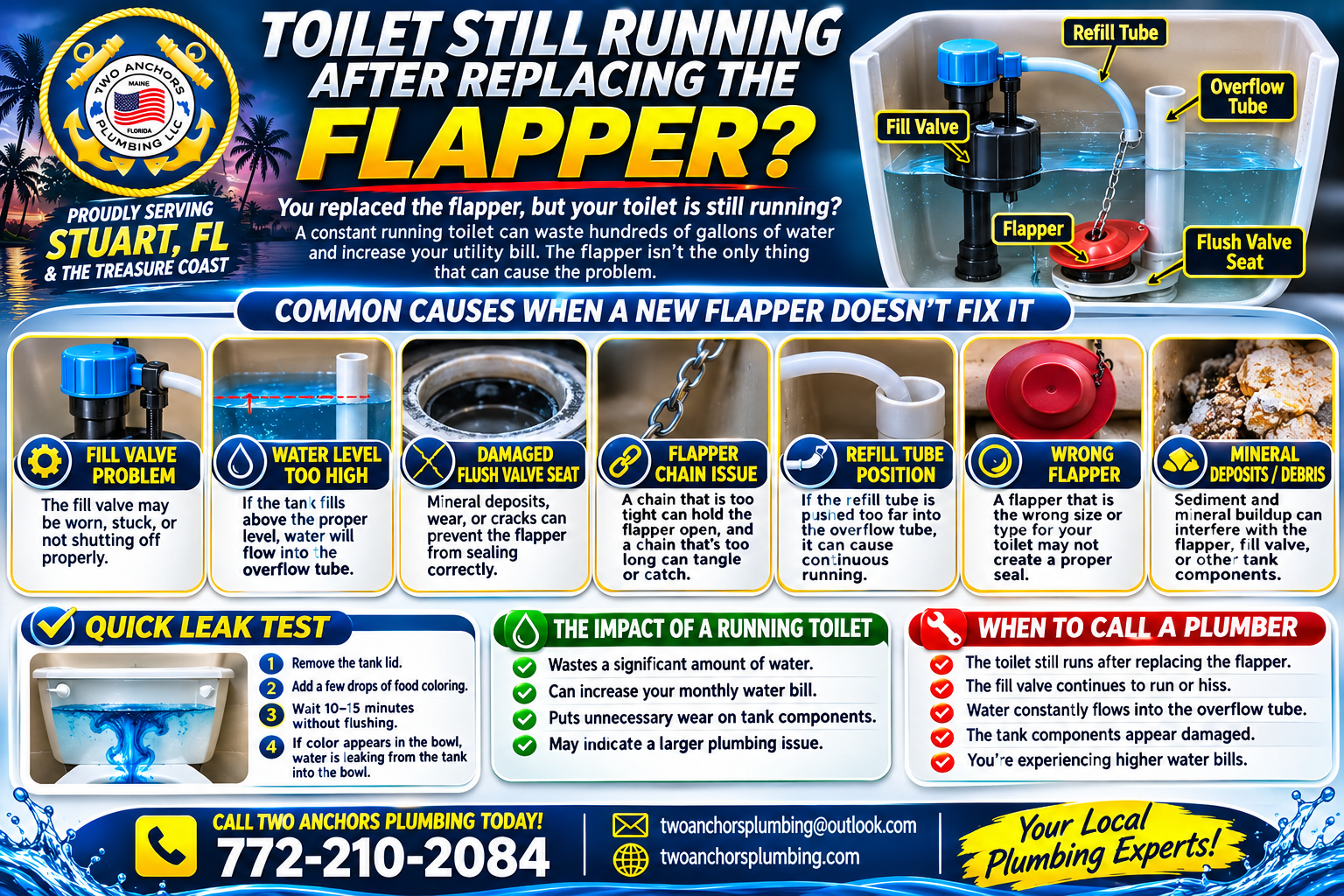
Why Does Your Toilet Keep Running Even After You Replace the Flapper?
A running toilet is one of those household problems that’s easy to ignore—until you notice your water bill climbing or hear water running in the middle of the night.
Most homeowners assume a worn-out flapper is responsible. So they visit the hardware store, purchase a replacement, install it, and expect the problem to disappear.
But what happens when the toilet keeps running anyway?
The truth is that a constantly running toilet can have several causes beyond a defective flapper. From improperly adjusted fill valves to hidden leaks inside the tank, understanding the problem can help prevent unnecessary water waste and repeated repairs.
For homeowners in Stuart, Florida, and throughout the Treasure Coast, knowing what to look for can make a significant difference.
1. Your Toilet’s Fill Valve May Be Malfunctioning
The fill valve controls how water enters the toilet tank after each flush.
When you flush, the tank empties and the fill valve opens to refill it. Once the water reaches the correct level, the valve should shut off.
However, internal components can wear out, become contaminated with debris, or fail to seal properly.
Common symptoms include:
- Water running continuously after the tank fills
- A hissing sound coming from the tank
- Water flowing into the overflow tube
- Intermittent refilling when nobody has flushed
If the fill valve cannot shut off properly, replacing the flapper won’t solve the problem.
A plumber can determine whether the valve needs adjustment, cleaning, or replacement.
2. The Water Level Is Set Too High
Inside the toilet tank is an overflow tube designed to prevent the tank from filling beyond a certain level.
If the water level is adjusted too high, excess water spills into the overflow tube and flows into the toilet bowl.
The fill valve may continue running because the tank never reaches a stable shutoff condition.
To check, carefully remove the tank lid and observe the water level.
The correct level depends on the toilet’s design and manufacturer instructions, but it should normally remain below the top of the overflow tube.
An improperly adjusted float or fill valve may be responsible.
3. The Flush Valve Seat Is Damaged
Even with a brand-new flapper, water can leak from the tank into the bowl if the surface underneath it is damaged.
The flush valve seat is the sealing surface where the flapper rests.
Over time, this surface may develop:
- Mineral deposits
- Rough spots
- Cracks
- Corrosion on susceptible components
- Other surface damage
When the flapper cannot create a watertight seal, water slowly escapes into the bowl.
The toilet may refill periodically or run continuously.
Replacing the flapper alone cannot repair a cracked or severely damaged flush valve seat.
4. The Flapper Chain Is Too Tight
Sometimes the problem isn’t the replacement flapper itself.
It’s how the chain is adjusted.
If the chain connecting the flush handle to the flapper is too short, it may hold the flapper slightly open.
Even a small opening can allow water to escape.
On the other hand, an excessively long chain can become tangled or caught beneath the flapper.
A properly adjusted chain should have a small amount of slack when the flapper is closed, while still allowing the flapper to lift during flushing.
5. The Refill Tube Is Positioned Incorrectly
The small flexible tube connected to the fill valve directs water toward the overflow tube during refilling.
Its purpose is to replenish the water in the toilet bowl after a flush.
However, if the refill tube is pushed too far down into the overflow tube, it can create siphoning conditions in some installations.
This may cause water to continue moving from the tank into the bowl.
The refill tube should be installed according to the manufacturer’s instructions, generally using the appropriate clip to maintain an air gap above the overflow opening.
6. The Replacement Flapper Is the Wrong Size or Type
Not all toilet flappers are interchangeable.
Different toilet models use different flush valve sizes, mounting arrangements, and sealing designs.
A flapper that looks similar to the original may not seal correctly.
For example, installing a flapper intended for a different flush valve can cause persistent leakage.
Some newer toilets use canister-style flush valves or other proprietary components rather than conventional flappers.
Before purchasing replacement parts, identify the toilet manufacturer and model whenever possible.
7. Mineral Deposits and Debris Inside the Tank
Over time, sediment and mineral deposits can accumulate inside toilet components.
These materials may interfere with the fill valve, flush valve, or sealing surfaces.
Small particles trapped beneath a flapper can prevent it from closing completely.
Debris inside a fill valve may also interfere with its ability to shut off.
If your toilet continues running after replacing parts, a professional inspection can help identify whether internal contamination is contributing to the problem.
How Much Water Can a Running Toilet Waste?
The amount depends on the severity of the leak.
A small, intermittent leak may go unnoticed for weeks, while a continuously running toilet can waste substantial amounts of water.
The U.S. Environmental Protection Agency notes that common household leaks, including toilet leaks, can contribute significantly to water waste.
For homeowners, the warning signs may include unexpectedly high water bills, frequent toilet refilling, and running-water sounds when fixtures aren’t being used.
Repairing the problem promptly can reduce unnecessary water consumption.
How to Check for a Hidden Toilet Leak
One simple way to check whether water is escaping from the tank into the bowl is a food-coloring test.
- Remove the toilet tank lid.
- Add several drops of food coloring to the tank water.
- Do not flush.
- Wait approximately 10–15 minutes.
- Check the water in the toilet bowl.
If color appears in the bowl without flushing, water is leaking from the tank into the bowl.
This test can confirm a tank-to-bowl leak, but it won’t necessarily identify which component is responsible.
When Should You Call a Professional Plumber?
Consider professional toilet repair if:
- You’ve already replaced the flapper and the toilet still runs.
- The fill valve continues hissing.
- Water constantly flows into the overflow tube.
- The toilet refills randomly.
- Internal tank components appear damaged.
- Your water bill increases unexpectedly.
- Multiple replacement parts have failed to solve the issue.
A plumber can inspect the entire flushing and refilling mechanism rather than replacing parts through trial and error.
Professional Toilet Repair in Stuart, FL
A constantly running toilet is more than an annoying sound. It can waste water, increase utility costs, and indicate worn or malfunctioning plumbing components.
At Two Anchors Plumbing, we help homeowners throughout Stuart, FL and the Treasure Coast diagnose and repair residential toilet problems.
Our plumbing services include toilet repairs, fill valve replacement, flush valve evaluation, leak detection, and toilet replacement when necessary.
Two Anchors Plumbing LLC
Serving Stuart, FL & the Treasure Coast
twoanchorsplumbing@outlook.com
Stop wasting water on a toilet that won’t stop running.
Comments are closed